


Table of Contents
- Why Organic Coffee Beans Matter for Home Brewing
- Understanding Ethical Coffee Certifications
- USDA Organic
- Fair Trade Certified
- Rainforest Alliance
- Direct Trade
- Best Organic Coffee Beans for Different Brewing Methods
- Best for French Press: Kicking Horse Coffee "Kick Ass"
- Best for Pour-Over: Counter Culture "Apollo"
- Best for Espresso: Cafe Don Pablo Subtle Earth
- Best for Cold Brew: Tiny Footprint Coffee
- Best Budget Option: Newman's Own Organic
- How to Choose Organic Coffee Beans for Your Taste
- Single Origin vs. Blends
- Storing Your Organic Coffee Beans
- Final Thoughts on Choosing Ethical Organic Coffee
You’ve decided to upgrade your morning cup, and now you’re staring at dozens of organic coffee options online. Which ones actually taste great? Which brands truly support farmers and the environment? Choosing the best organic coffee beans for home brewing can feel overwhelming when every bag claims to be “the best.”
This guide breaks down what makes organic coffee worth buying, highlights ethical certifications that matter, and recommends specific beans that deliver on both flavor and values. Whether you use a French press, pour-over, or espresso machine, you’ll find options here that fit your brewing style.
Why Organic Coffee Beans Matter for Home Brewing
Organic coffee beans are grown without synthetic pesticides, herbicides, or fertilizers. For you as a home brewer, this means a cleaner cup with fewer chemical residues. But the benefits extend beyond your mug.
Organic farming practices protect soil health, preserve biodiversity, and reduce water contamination in coffee-growing regions. Many coffee farms sit in ecologically sensitive areas, so these practices make a real difference for local ecosystems.
- No synthetic chemicals in the growing process
- Better for soil and water quality in farming communities
- Often shade-grown, which supports bird habitats
- Typically results in more complex, nuanced flavors
From a taste perspective, many coffee enthusiasts find that organic beans offer cleaner, more distinct flavor profiles. Without chemical interference, the natural characteristics of the coffee’s origin shine through more clearly.
Understanding Ethical Coffee Certifications
The word “ethical” gets thrown around a lot in coffee marketing. To cut through the noise, look for specific certifications that hold producers accountable. Here’s what the main labels actually mean.
USDA Organic
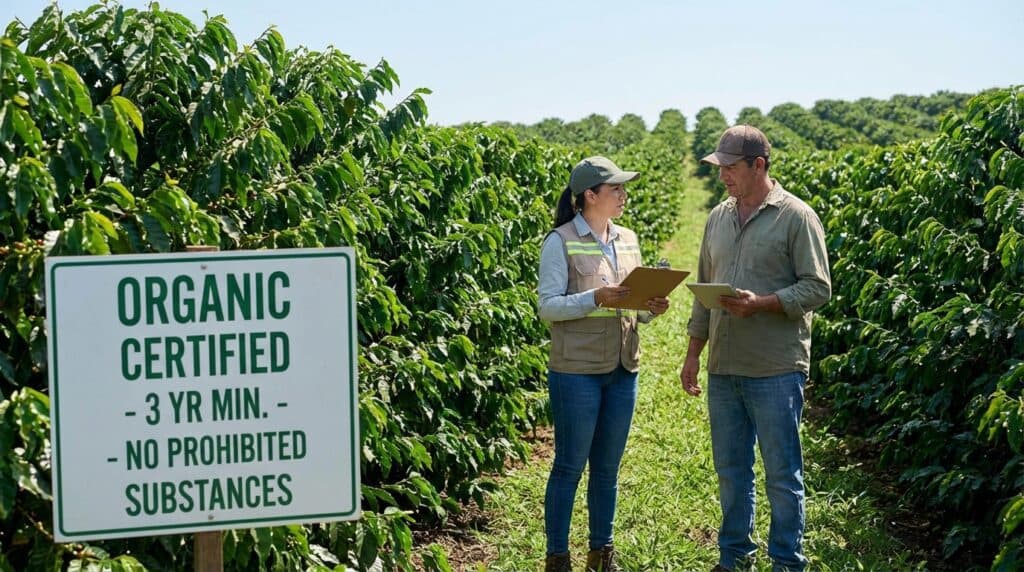
This certification confirms the coffee was grown without prohibited substances for at least three years. It’s verified through annual inspections. While it doesn’t address labor practices directly, it ensures environmental standards are met.
Fair Trade Certified
Fair Trade guarantees farmers receive a minimum price for their beans, plus a premium for community development projects. It also requires safe working conditions and prohibits child labor. This certification directly impacts farmer livelihoods.
Rainforest Alliance
This seal focuses on environmental sustainability and worker welfare. Farms must meet standards for ecosystem conservation, soil and water management, and fair treatment of workers.
Direct Trade
Not an official certification, but many specialty roasters use this model. They buy directly from farmers, often paying above Fair Trade prices. The transparency varies by company, so research individual roasters if this matters to you.
In short: look for at least one credible certification, and don’t hesitate to check a roaster’s website for details about their sourcing relationships.
Best Organic Coffee Beans for Different Brewing Methods
Not every organic coffee works equally well for every brewing method. Here are top picks organized by how you’ll likely brew them at home.
Best for French Press: Kicking Horse Coffee “Kick Ass”
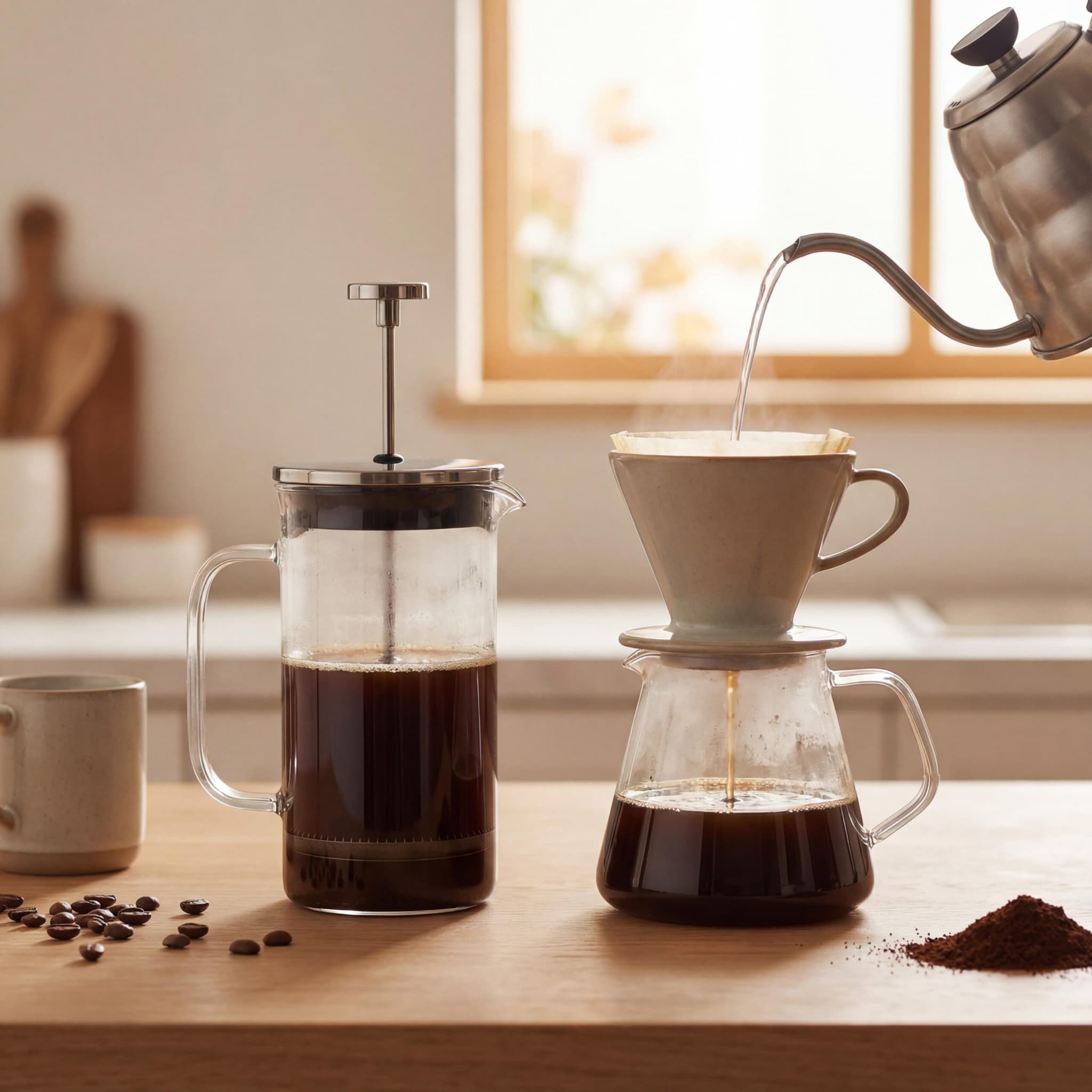
This Canadian roaster offers a dark roast blend that’s both organic and Fair Trade certified. The bold, smoky flavor with chocolate undertones stands up perfectly to the full immersion of French press brewing. It’s widely available and reasonably priced for specialty coffee.
Imagine this: Sunday morning, French press on the counter, and a cup that’s rich without being bitter. That’s what this blend delivers consistently.
Best for Pour-Over: Counter Culture “Apollo”
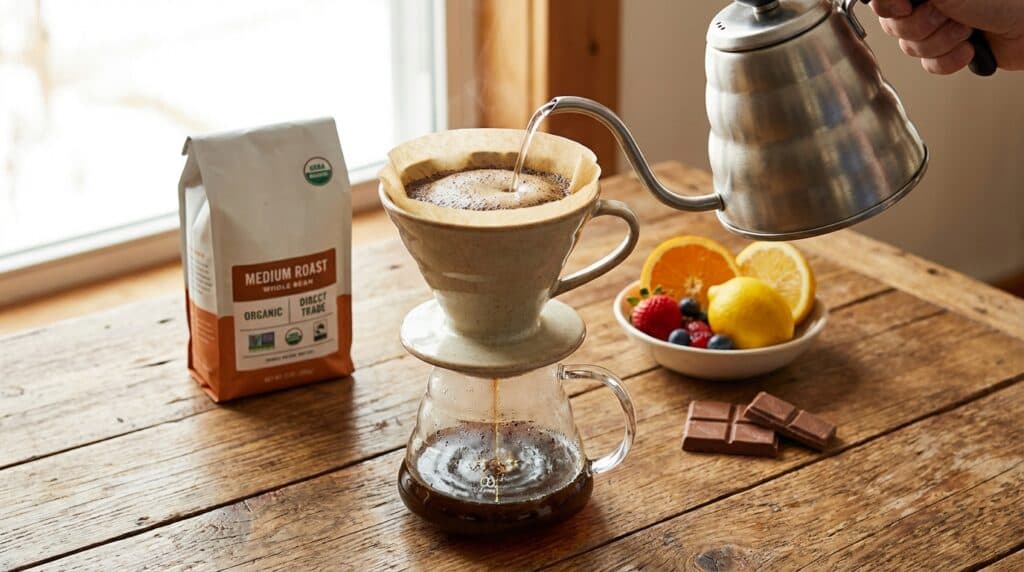
Counter Culture has built a reputation for transparency and quality. Their Apollo blend is certified organic and sourced through direct relationships with farmers. It offers bright, fruity notes that pour-over methods highlight beautifully. The medium roast lets origin characteristics come through clearly.
- Tasting notes: citrus, berry, milk chocolate
- Roast level: medium
- Certifications: organic, direct trade
Best for Espresso: Cafe Don Pablo Subtle Earth
Finding organic beans that pull great espresso shots isn’t always easy. Cafe Don Pablo’s Subtle Earth blend hits the mark with a medium-dark roast that produces rich crema and balanced flavor. It’s USDA organic and sourced from small farms in Honduras.
The low acidity makes it forgiving for home espresso setups, where dialing in can be tricky. You get a smooth, full-bodied shot without harsh bitterness.
Best for Cold Brew: Tiny Footprint Coffee
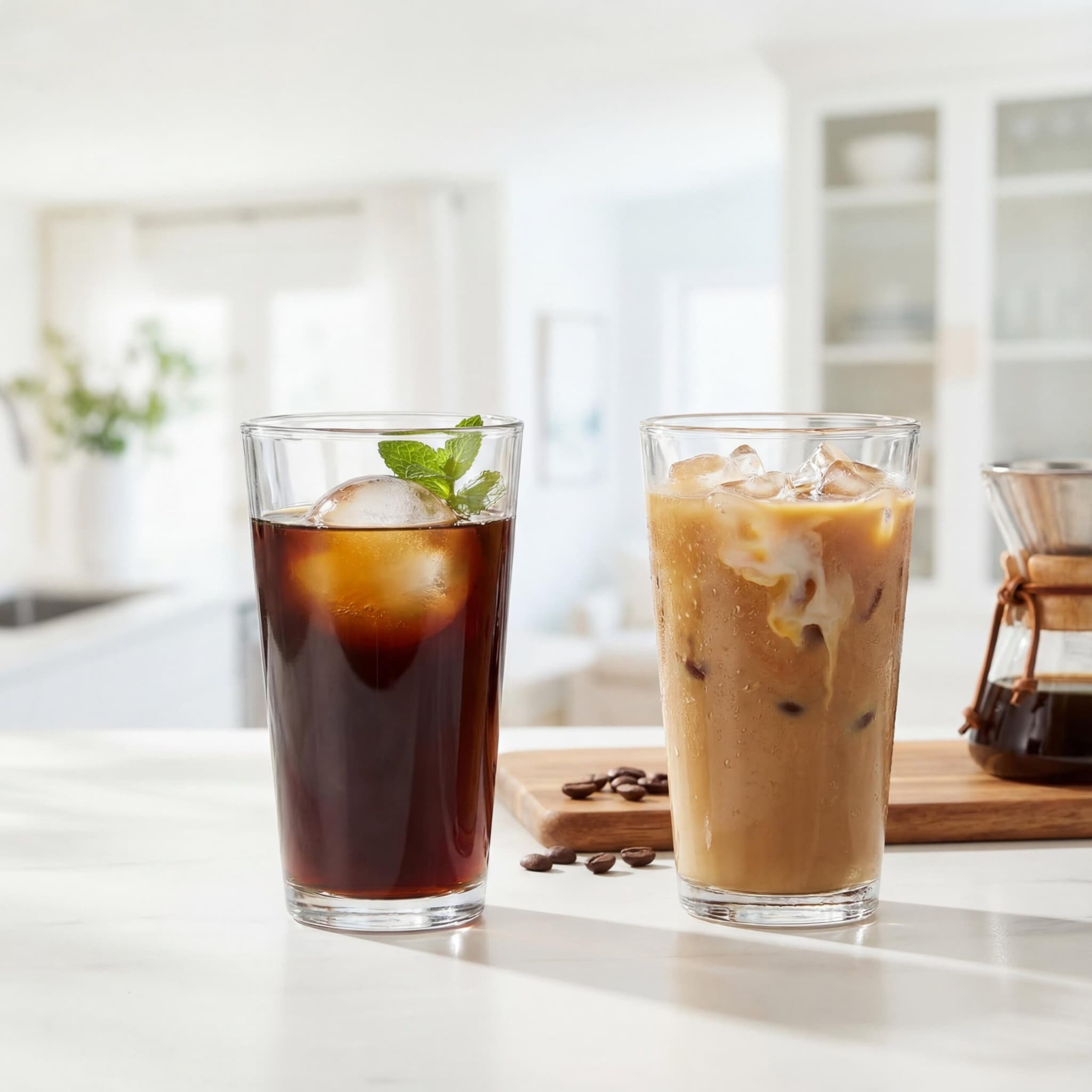
Cold brew requires beans that won’t turn overly acidic or flat during long extraction. Tiny Footprint’s organic blend works exceptionally well here. What makes them stand out: they’re carbon negative, meaning they fund reforestation projects that offset more carbon than their operations produce.
The flavor profile leans toward chocolate and nuts, which translates into a smooth, naturally sweet cold brew concentrate.
Best Budget Option: Newman’s Own Organic
If you’re watching your budget but still want organic and ethical, Newman’s Own delivers solid quality at grocery store prices. All profits go to charity, and the coffee is both organic and Fair Trade certified. The flavor won’t compete with specialty roasters, but it’s a reliable daily drinker.
How to Choose Organic Coffee Beans for Your Taste
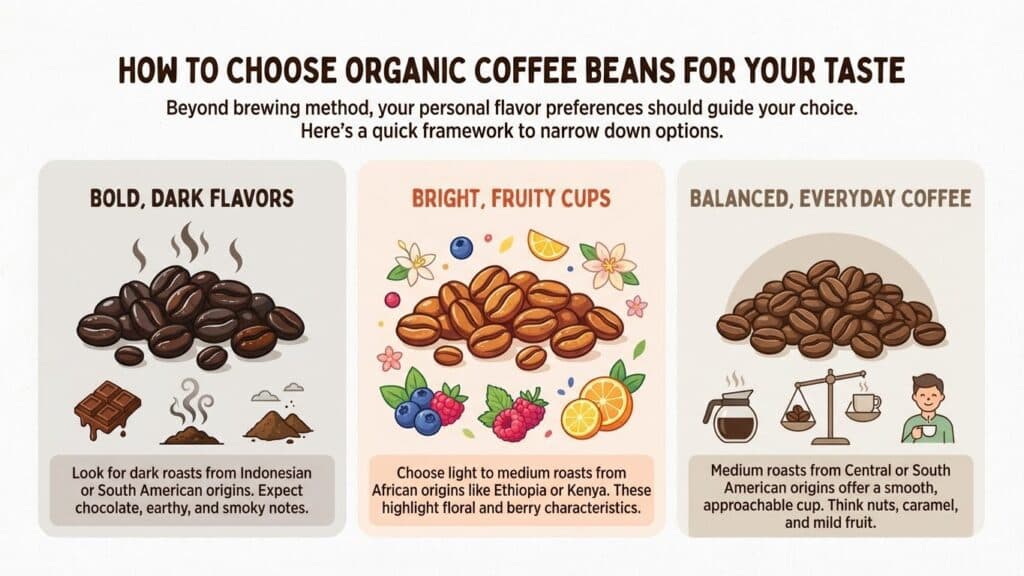
Beyond brewing method, your personal flavor preferences should guide your choice. Here’s a quick framework to narrow down options.
- If you like bold, dark flavors: Look for dark roasts from Indonesian or South American origins. Expect chocolate, earthy, and smoky notes.
- If you prefer bright, fruity cups: Choose light to medium roasts from African origins like Ethiopia or Kenya. These highlight floral and berry characteristics.
- If you want balanced, everyday coffee: Medium roasts from Central or South America offer nutty, caramel sweetness without extreme acidity or bitterness.
Roast date matters too. For the best flavor, buy beans roasted within the past two to four weeks. Many specialty roasters print roast dates on bags, while mass-market brands often don’t. Freshness makes a noticeable difference in your cup.
Single Origin vs. Blends
Single origin organic coffees come from one farm or region, offering distinct flavor profiles tied to that specific place. They’re great for exploring different taste experiences.
Blends combine beans from multiple origins to create balanced, consistent flavor. They’re often more forgiving for brewing and work well if you want reliable results every morning.
Neither is inherently better. It depends on whether you want to explore or stick with something dependable.
Storing Your Organic Coffee Beans
You’ve invested in quality beans, so store them properly. Exposure to air, light, heat, and moisture degrades coffee quickly.
- Keep beans in an airtight container at room temperature
- Avoid clear containers that let light in
- Don’t refrigerate or freeze unless storing for more than a month
- Buy only what you’ll use in two to three weeks
A common mistake: leaving beans in the bag with a clip. Even with the clip, too much air gets in. Transfer to a proper canister, and you’ll notice the difference in freshness.
Final Thoughts on Choosing Ethical Organic Coffee
Finding the best organic coffee beans for home brewing comes down to matching your brewing method, flavor preferences, and values. The options above represent a range of price points and styles, all with credible organic and ethical credentials.
Start with one bag that fits your brewing setup and taste profile. Pay attention to roast dates, store your beans properly, and you’ll be brewing coffee that tastes great and supports better practices in the coffee industry. Your morning routine can be both delicious and responsible without much extra effort.


Comments