


Table of Contents
- Why Your Espresso Grinder Matters More Than Your Machine
- The Best Entry-Level Espresso Grinders Compared
- Baratza Encore ESP – The Reliable Workhorse
- 1Zpresso JX-Pro S – The Overachiever
- Eureka Mignon Manuale – The "Buy Once" Option
- Breville Smart Grinder Pro – The Versatile Compromise
- What About Cheaper Options?
- My Honest Recommendation
- Final Thoughts
There’s this specific sound—that low, satisfying whir when freshly roasted beans hit quality burrs—that still makes my morning feel like a ritual instead of a chore. If you’re hunting for the best coffee grinders for espresso at home without emptying your savings account, I get it. The market is overwhelming, and frankly, a lot of “budget” options are just bad.
If espresso is your end goal but your budget is tight, start with a budget burr grinder for home coffee before spending more on premium gear.
Quick Verdict: For most beginners, I recommend the Baratza Encore ESP if you want electric convenience, or the 1Zpresso JX-Pro S if you don’t mind hand grinding and want superior grind quality for less money. The Eureka Mignon Manuale is worth the stretch if your budget allows—it’s the one you won’t outgrow.
Why Your Espresso Grinder Matters More Than Your Machine
Here’s the ugly truth. That $600 espresso machine you’re eyeing? It’ll make mediocre espresso with a bad grinder. But a $300 machine paired with a proper grinder? Magic.
Espresso demands precision. We’re talking grind adjustments measured in microns. Your drip coffee grinder—even a decent one—probably can’t go fine enough, or lacks the micro-adjustments needed to dial in a shot. I learned this the hard way when I tried using my old Cuisinart for espresso. Twenty seconds of channeling and sour disappointment. Never again.
What makes an espresso-capable grinder different:
- Stepless or fine-stepped adjustment – You need tiny increments to hit that 25-30 second extraction window
- Consistent particle size – Uneven grounds = uneven extraction = bitter AND sour notes (yes, both)
- Fine enough range – True espresso grind looks almost like powdered sugar
The Best Entry-Level Espresso Grinders Compared
| Grinder | Type | Price Range | Best For | Adjustment |
|---|---|---|---|---|
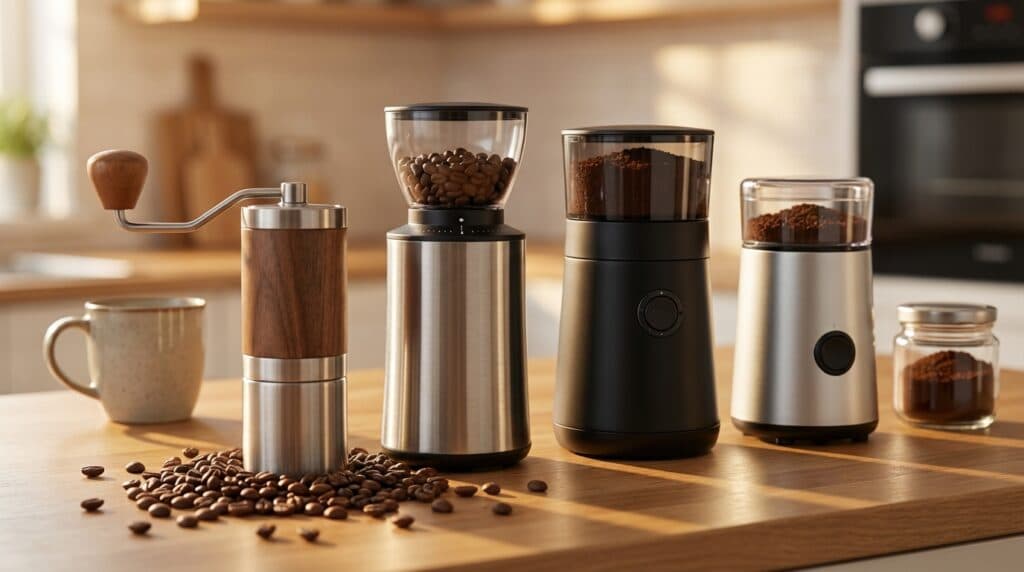
| Baratza Encore ESP | Electric | $200-220 | Convenience seekers | Stepped (40 settings) |
| 1Zpresso JX-Pro S | Manual | $159-179 | Quality-focused on budget | Stepped (fine clicks) |
| Eureka Mignon Manuale | Electric | $300-350 | Long-term investment | Stepless |
| Breville Smart Grinder Pro | Electric | $200-250 | All-rounders who also brew drip | Stepped (60 settings) |
Baratza Encore ESP – The Reliable Workhorse
Baratza finally listened. The original Encore was beloved for drip and pour-over but couldn’t quite nail espresso. The ESP version fixes that with a finer grind range and tighter adjustments.
Pros:
- Dead simple to use—my mom figured it out in two minutes
- Excellent customer service and parts availability (Baratza is legendary for this)
- Grinds fine enough for pressurized AND unpressurized baskets
- Quiet enough for early mornings
Cons:
- Stepped adjustment means you might land “between” ideal settings
- Retention is around 1-2 grams (annoying for single dosing)
- Plastic build feels less premium than competitors
Who it’s for: Beginners who want to press a button and get consistent results. People who value convenience over absolute perfection.
Who should skip it: Anyone planning to upgrade to a prosumer machine within a year. You’ll outgrow it.
1Zpresso JX-Pro S – The Overachiever
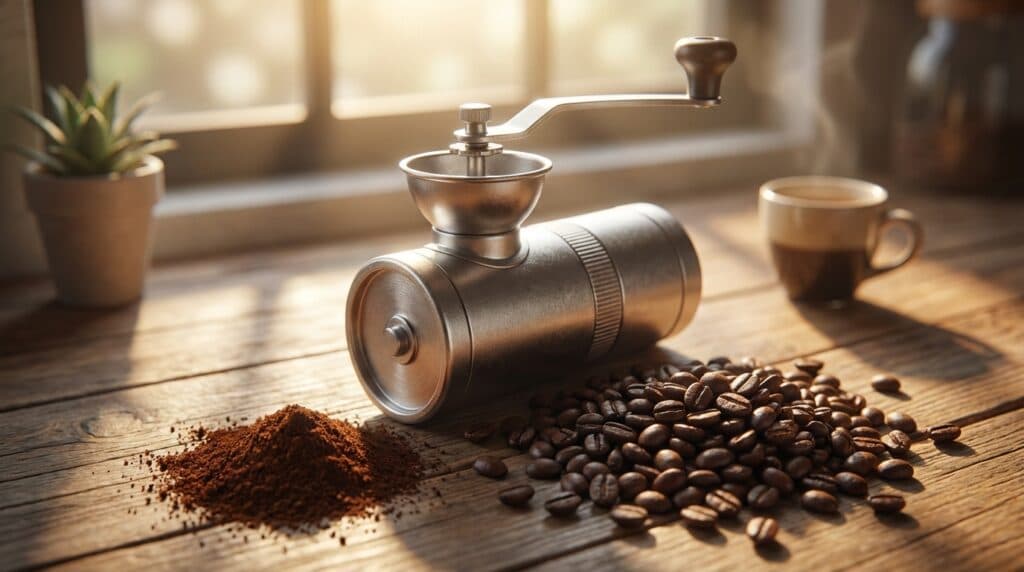
Honestly, this thing punches way above its weight. I was skeptical about hand grinding for espresso—seemed tedious. Then I borrowed my friend’s JX-Pro for a week. The grind consistency rivals electric grinders costing twice as much.
The “S” version adds a foldable handle. Nice for storage, but the original works just as well.
Pros:
- Exceptional grind quality for the price—48mm steel burrs are no joke
- Near-zero retention (perfect for single dosing)
- Built like a tank; feels premium in hand
- Silent operation (great for not waking the household)
Cons:
- Manual grinding takes 30-45 seconds per dose—not for the impatient
- Your arm will know it worked (especially with light roasts)
- No timer or dosing features, obviously
Who it’s for: People who prioritize grind quality over speed. Travelers. Anyone who finds the ritual of hand grinding meditative rather than annoying.
Who should skip it: If you’re making multiple drinks back-to-back or have wrist issues, go electric.
Eureka Mignon Manuale – The “Buy Once” Option
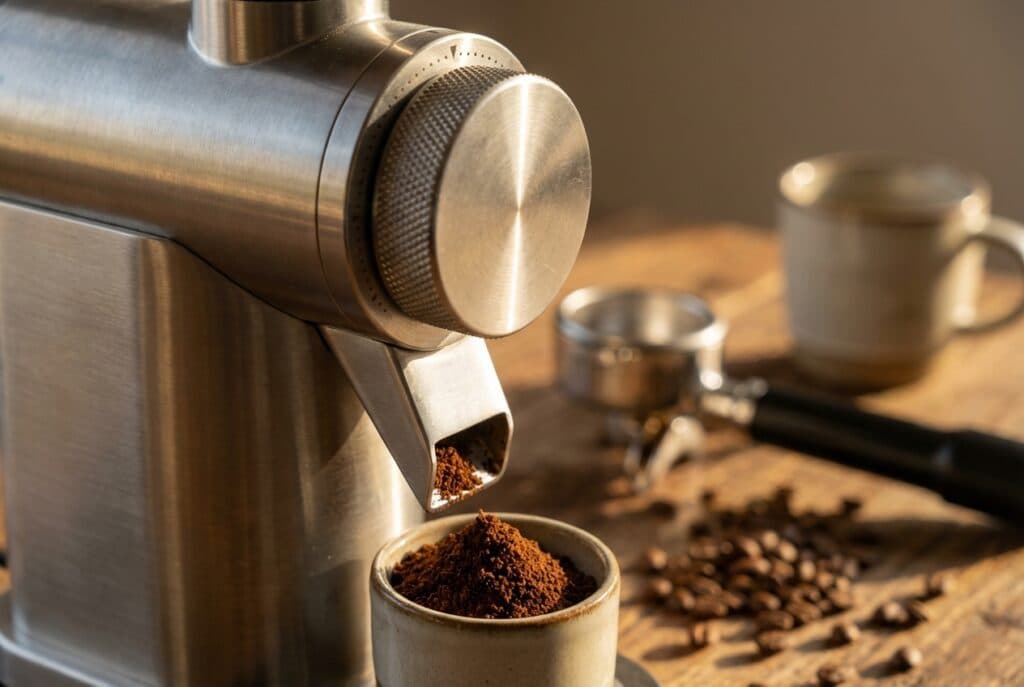
The Mignon line is where Eureka’s entry-level meets serious espresso capability. The Manuale sits at the bottom of the range but shares the same 50mm flat burrs as its pricier siblings. That matters.
I hate to admit it, but I regret not starting here. Would’ve saved me from buying two cheaper grinders first.
Pros:
- Stepless adjustment—infinite fine-tuning for dialing in
- Italian build quality; solid metal construction
- Quiet operation (the “Silenzio” version is even quieter)
- You won’t outgrow it for years
Cons:
- Higher upfront cost—around $300-350
- Hopper-based design isn’t ideal for single dosing without mods
- Basic timer dial takes practice to nail consistent doses
Who it’s for: Anyone who wants to buy one grinder and forget about upgrading. People already committed to the espresso hobby.
Who should skip it: True beginners still testing if espresso is “their thing.”
Breville Smart Grinder Pro – The Versatile Compromise
This one’s polarizing in the coffee community. Some love it. Some think it’s overrated. I land somewhere in the middle.
The Smart Grinder Pro does a lot of things well but nothing exceptionally. It handles espresso adequately and switches to coarser grinds for French press without drama. Jack of all trades situation.
Pros:
- 60 grind settings cover espresso through French press
- Digital timer and dose control are beginner-friendly
- Looks sleek on the counter
- Widely available and often on sale
Cons:
- Grind consistency at espresso settings is just okay—not great
- Upper burr can shift, requiring recalibration
- Some users report it struggles with light roasts
Who it’s for: Households that brew multiple methods and want one grinder to handle everything.
Who should skip it: Espresso purists. If espresso is your primary focus, spend the same money on the Encore ESP or save for the Mignon.
What About Cheaper Options?
Below $150 for electric grinders, things get rough. I’ve tested a few budget options, and most either can’t grind fine enough or produce wildly inconsistent particle sizes. Your shots will channel, your timing will be unpredictable, and you’ll blame your machine when it’s actually the grinder.
If budget is truly tight, go manual. The 1Zpresso JX (non-Pro) or Kingrinder K4 offer decent espresso capability under $120. They require more effort to dial in, but they work.
My Honest Recommendation
For most people reading this, here’s what I’d do:
- Tight budget + don’t mind hand grinding: 1Zpresso JX-Pro S. Best grind quality under $200, period.
- Want electric convenience: Baratza Encore ESP. Reliable, repairable, and good enough to learn on.
- Ready to commit: Eureka Mignon Manuale. Costs more upfront but saves money long-term because you won’t upgrade for years.
Skip the Breville Smart Grinder Pro unless you genuinely need one grinder for multiple brew methods. For dedicated espresso grinding, the others outperform it.
Final Thoughts
Getting into home espresso is expensive enough without buying the wrong grinder twice. I’ve been there—my closet has the receipts to prove it. Start with something that can actually produce espresso-fine grinds with decent consistency, and you’ll save yourself months of frustration.
The grinder you choose matters more than almost any other variable. Get this right, and even a modest espresso machine will reward you with shots worth savoring.
If espresso is your end goal but your budget is tight, start with a budget burr grinder for home coffee before spending more on premium gear.

Comments