


Table of Contents
- Quick Verdict: Hemp Milk Takes the Win
- Rice Milk in Coffee: What to Expect
- The Texture Truth
- Flavor Profile
- Rice Milk Pros and Cons
- Hemp Milk in Coffee: A Different Story
- The Texture Truth
- Flavor Profile
- Hemp Milk Pros and Cons
- Rice Milk vs. Hemp Milk: Side-by-Side Comparison
- Who Is Each Milk For?
- Rice Milk Is For You If:
- Rice Milk Is NOT For You If:
- Hemp Milk Is For You If:
- Hemp Milk Is NOT For You If:
- How to Make Either Milk Work Better in Coffee
- Temperature Matters
- Choose the Right Coffee
- Look for Barista Blends
- Add a Touch of Fat
- Frequently Asked Questions
- Does rice milk curdle in coffee?
- Is hemp milk better than rice milk nutritionally?
- Can you froth rice milk or hemp milk?
- Why does hemp milk taste grassy?
- Which milk alternative is best for lattes?
- Best Pick for Most Coffee Drinkers
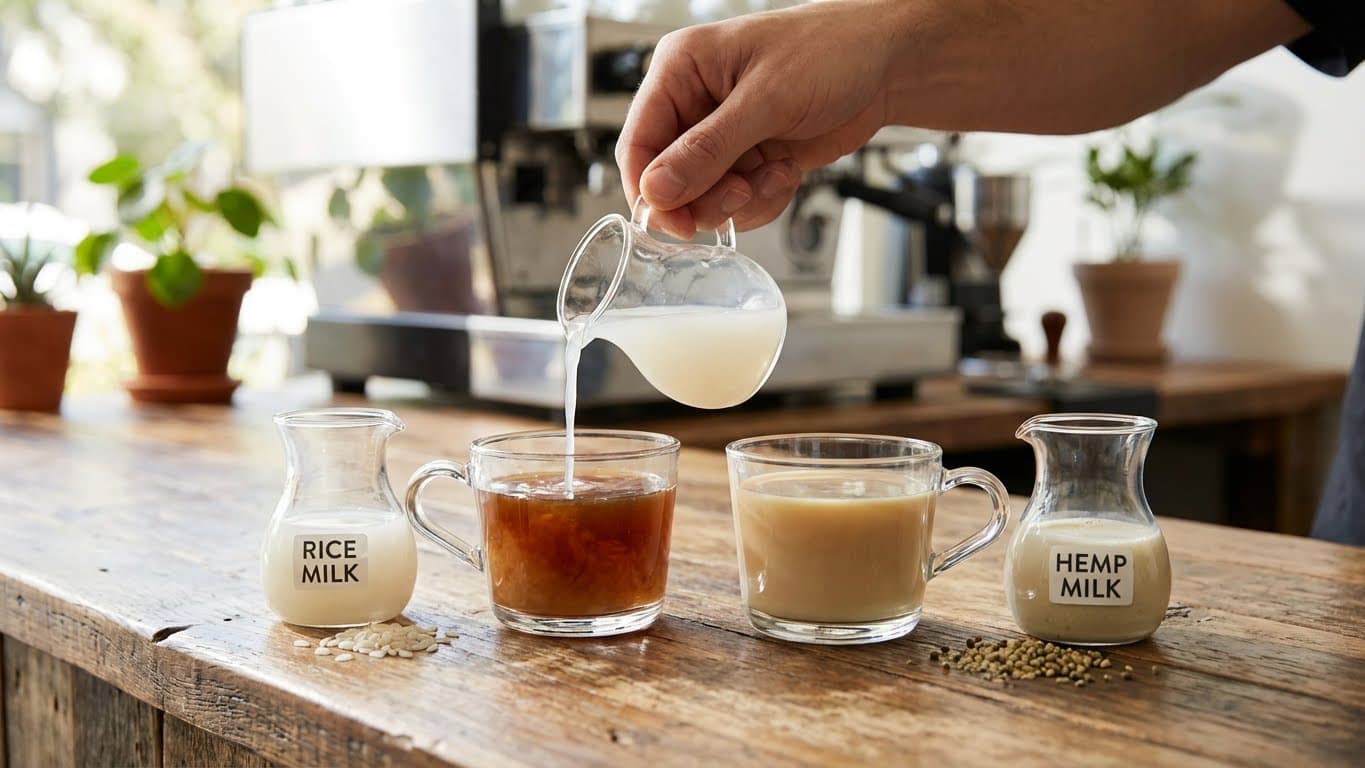
Hemp milk is usually the better choice for coffee. It has more body, a little natural fat, and enough flavor to stand up to medium and darker roasts. Rice milk can work, but mostly in iced coffee, cold brew, or very mild cups where thin texture is less obvious.
The short version is blunt: if your complaint is "this tastes watered down," rice milk will probably confirm that feeling. Hemp milk is not as creamy as oat milk or dairy, and its earthy taste can be divisive, but it behaves more like a coffee creamer than rice milk does. The right answer depends on texture, allergies, roast style, and whether you care more about neutrality or mouthfeel.
Quick Verdict: Hemp Milk Takes the Win
Choose hemp milk for hot coffee, lattes without serious latte art ambitions, and medium roasts with cocoa, nut, or caramel notes. Choose rice milk if you need a very allergy-friendly option, prefer a naturally sweet taste, or mostly drink cold coffee.
Neither one is a miracle substitute. Regular rice milk is thin because it is mostly water and carbohydrate. Hemp milk has more fat and protein, so it feels rounder in the cup, but it can taste grassy if the brand is not well balanced. For nutrition checks, brand labels matter; broad databases such as USDA FoodData Central are useful, but fortified cartons vary a lot.
Rice Milk in Coffee: What to Expect
Rice milk is made by blending rice with water, then straining and usually fortifying the liquid. Some brands add oil, salt, stabilizers, or sweetener. The result is light, sweet, and easy to drink on its own, but coffee exposes its weak point: body.
The Texture Truth
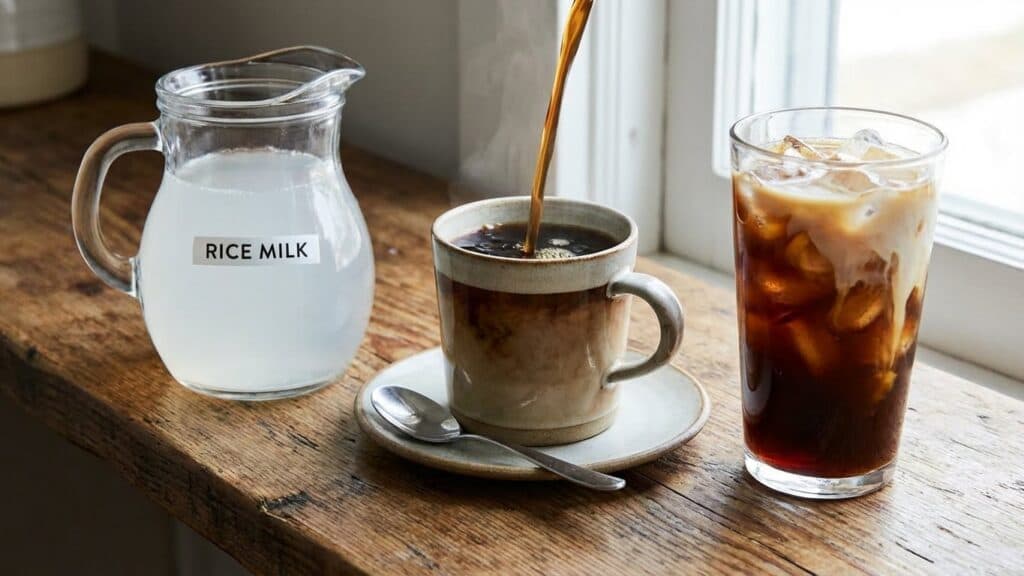
Rice milk is watery in coffee because it has very little protein or fat compared with dairy, soy, or oat barista blends. Pour it into a hot mug and it tends to disappear quickly, lightening the color without adding much texture. In a French press or drip coffee, that can taste like you added sweetened water.
It is kinder in cold brew. Cold coffee has less temperature shock, and cold brew already has a smoother, lower-acid profile. If you use rice milk, start there rather than with espresso.
Flavor Profile
Rice milk tastes mild, lightly sweet, and sometimes cereal-like. That sweetness can soften a bitter dark roast, but it may also make a fruity light roast taste oddly flat. It does not have enough richness to balance sharp acidity, so very bright coffees can taste thinner after rice milk is added.
Rice Milk Pros and Cons
- Pros: Mild flavor, naturally sweet, often nut-free and soy-free, easy to find, usually affordable
- Cons: Thin body, weak foam, low protein, higher carbohydrate profile, can separate in hot acidic coffee
Practical tip: Let hot coffee cool for 30 to 60 seconds before adding rice milk. It will not turn rice milk creamy, but it can reduce splitting and make the cup taste less harsh.
Hemp Milk in Coffee: A Different Story
Hemp milk is made from hemp seeds and water. It does not contain meaningful THC or CBD, so the coffee conversation is really about seed flavor, fat, protein, and stability. Compared with rice milk, it has more substance.
The Texture Truth
Hemp milk lands between rice milk and oat milk. It is not thick, but the seed oils give it a softer, more rounded mouthfeel. In brewed coffee, it creates a visible cream cloud instead of vanishing immediately. In a simple latte, it can foam modestly if you use a barista-style version.
The caveat is consistency. Some hemp milks are formulated for cereal and smoothies, not heat. Those can separate or taste chalky. Coffee-specific or higher-fat cartons perform better.
Flavor Profile
Hemp milk tastes earthy, nutty, and sometimes green. That is the main reason people reject it. With chocolate-forward coffee, the flavor can feel intentional. With floral or citrusy beans, it can clash fast.
For a first test, pair hemp milk with a medium roast from Brazil, Colombia, or Sumatra, especially if the bag mentions cocoa, walnut, brown sugar, or low acidity.
Hemp Milk Pros and Cons
- Pros: More body than rice milk, contains seed fats, moderate foam potential, usually nut-free and soy-free, works with chocolatey roasts
- Cons: Earthy taste, higher price, uneven brand quality, can split in very hot or acidic coffee
Practical tip: Shake hemp milk hard before pouring. Seed solids and fat settle during storage, and that separation is one reason the last cup from a carton can taste worse than the first.
Rice Milk vs. Hemp Milk: Side-by-Side Comparison
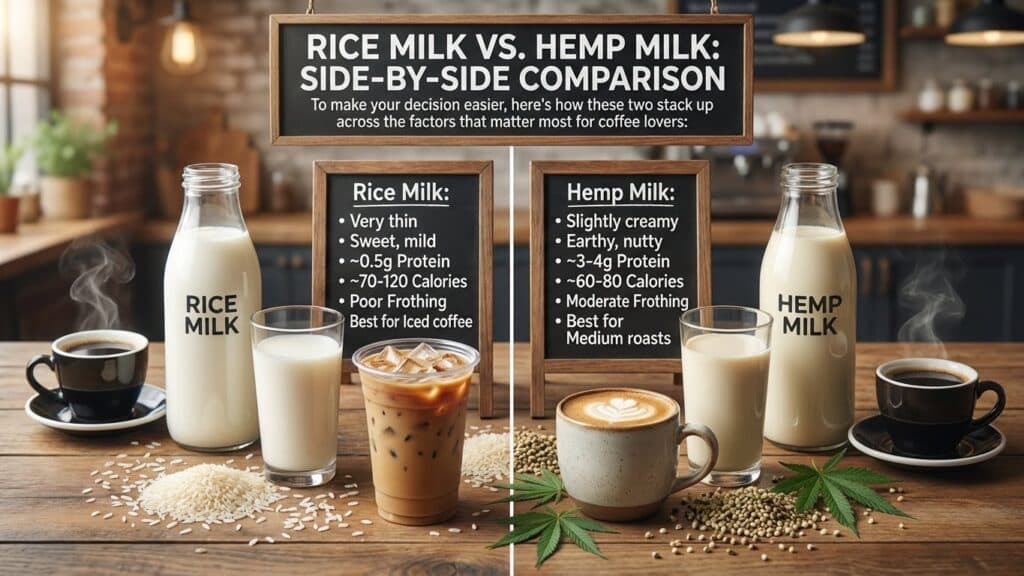
Here is the coffee-focused comparison. Treat nutrition numbers as approximate; fortified brands and sweetened versions can change the label quickly.
| Factor | Rice Milk | Hemp Milk |
|---|---|---|
| Texture/Creaminess | Very thin, watery | Slightly creamy, more body |
| Taste | Sweet, mild, grainy | Earthy, nutty, grassy |
| Protein (per cup) | ~0.5g | ~3-4g |
| Calories (per cup) | ~70-120 | ~60-80 |
| Frothing Ability | Poor | Moderate |
| Best Coffee Pairing | Iced coffee, cold brew | Medium roasts, chocolate notes |
| Price | Budget-friendly | Mid-range to premium |
| Allergen-Friendly | Yes (nut, soy, gluten-free) | Yes (nut, soy, gluten-free) |
Who Is Each Milk For?
Rice Milk Is For You If:
- You need a milk alternative that avoids common allergens
- You drink cold brew or iced coffee more than hot espresso drinks
- You like a mild, lightly sweet taste
- You want a lower-cost carton for casual use
- You do not need foam or latte texture
Rice Milk Is NOT For You If:
- You want creamy hot coffee
- You expect stable foam
- You are trying to reduce sweetness or carbohydrates
- You brew bright, acidic coffees every day
Hemp Milk Is For You If:
- You want more body than rice milk can offer
- You like earthy or nutty flavors
- You drink medium or dark roasts
- You want a nut-free, soy-free option with some foam potential
- You are willing to test brands instead of judging by one carton
Hemp Milk Is NOT For You If:
- You need a neutral flavor
- You dislike grassy notes
- You are shopping only by lowest price
- You mostly brew delicate light roasts
How to Make Either Milk Work Better in Coffee

If rice or hemp milk is already in your fridge, small technique changes can rescue the cup.
Temperature Matters
Plant milks separate more easily when hot coffee, acidity, and cold milk collide. Warm the milk gently, or let the coffee cool briefly before combining. Aim for warm, not boiling. Overheated plant milk can taste cooked and thin at the same time.
Choose the Right Coffee
Lower-acid medium roasts are safer. The Specialty Coffee Association focuses on balance through brew ratio, strength, and extraction; at home, the practical version is simple: if your coffee already tastes sharp black, thin plant milk will exaggerate that sharpness.
Look for Barista Blends
Barista blends are not just marketing. They often include added oils, stabilizers, or adjusted solids to handle heat and steam. That matters more for rice milk than hemp milk, but both benefit.
Add a Touch of Fat
If the texture is the only problem, a small spoon of coconut cream or a richer milk alternative can round out the cup. Keep it small. Too much added fat can bury the coffee and leave a slick finish.
Bottom line: Hemp milk is the stronger coffee choice. Rice milk is useful, but it asks you to lower expectations or move the drink cold.
Frequently Asked Questions
Does rice milk curdle in coffee?
It can separate, especially in hot acidic coffee. Use lower-acid beans, avoid boiling temperatures, and add the milk slowly. If it still splits, that carton may simply be a poor coffee match.
Is hemp milk better than rice milk nutritionally?
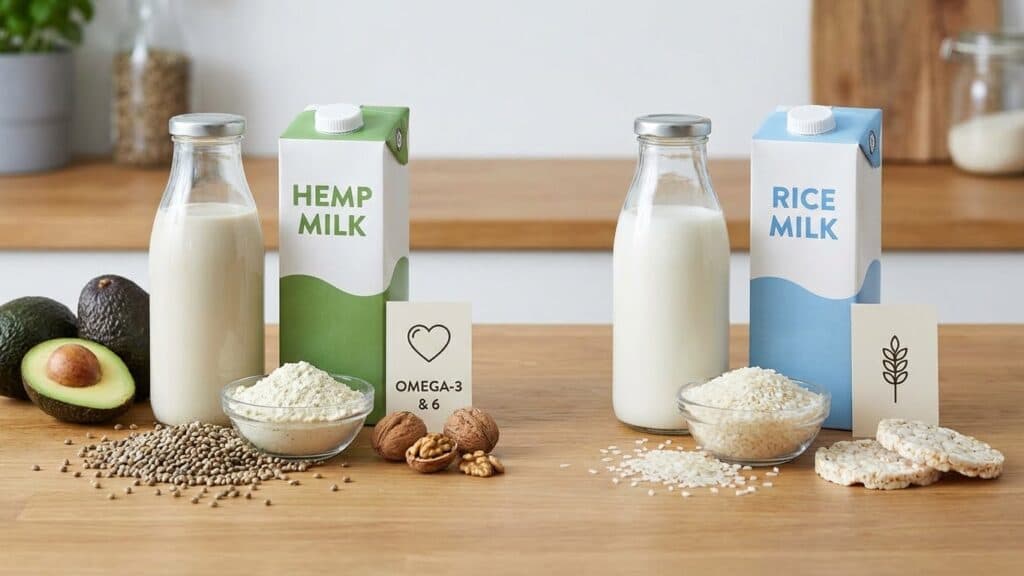
Usually, yes, because hemp milk tends to contain more fat and protein. But compare labels, especially for sweetened or fortified products. Some rice milks add calcium and vitamins; some hemp milks add sugar.
Can you froth rice milk or hemp milk?
Rice milk barely froths unless it is a special barista formula. Hemp milk can create light foam, but it rarely gives polished microfoam. For latte art, oat and soy are more reliable.
Why does hemp milk taste grassy?
The flavor comes from the hemp seeds. Some brands soften it with vanilla, salt, or sweetener. Unsweetened plain versions usually taste the most earthy.
Which milk alternative is best for lattes?
Between these two, hemp milk wins. Overall, oat barista blends and soy milk generally steam better because they have better foam structure and more neutral coffee compatibility.
Best Pick for Most Coffee Drinkers
If you are choosing only between rice milk and hemp milk, buy hemp milk first. It is less watery, more satisfying in hot coffee, and more flexible across brew methods. Start with a small carton if you are sensitive to earthy flavors.
Use rice milk when allergies, budget, or sweetness matter more than texture. It is not a bad product; it is just a weak creamer. In coffee, that distinction matters.



Comments